Archive #001
10 min read
9CAARS EDITORIAL

Some cars are designed for a market. The Lotec C1000 was built for a single imagination: a private commission from Dubai, conceived to make the supercars of its time feel suddenly ordinary.
A brief without limits
In 1990, Sheikh Ahmed bin Saeed Al Maktoum approached German race-car constructor Kurt Lotterschmid with a singular ambition: build the fastest street-legal car on Earth. Lotec had already earned its reputation in Group 5 and Group C endurance racing. The C1000 gave that experience a road-going purpose.
Carbon, boost and a thousand horsepower
Its name was the entire brief. C stood for carbon fibre; 1000 was the horsepower target. Four years of development produced a carbon monocoque, a 1,080 kg silhouette shaped by Le Mans logic and a twin-turbocharged Mercedes-Benz M117 V8 chosen for one reason: it could survive the boost.
A number that never needed proof
Lotec claimed 268 mph. No official run ever sealed it, partly because 1995 tyre technology had not caught up with the question. Delivered to the UAE, the C1000 slipped out of public view before reappearing years later in the hands of collectors, restorers and finally a private European collection.
The details that make it stranger
The C1000’s engineering brief extended beyond headline numbers. Lotec shaped a three-piece carbon-fibre luggage set specifically for the awkward, concealed storage spaces beneath the side body panels — a small concession to the fact that its owner was expected to travel in it.
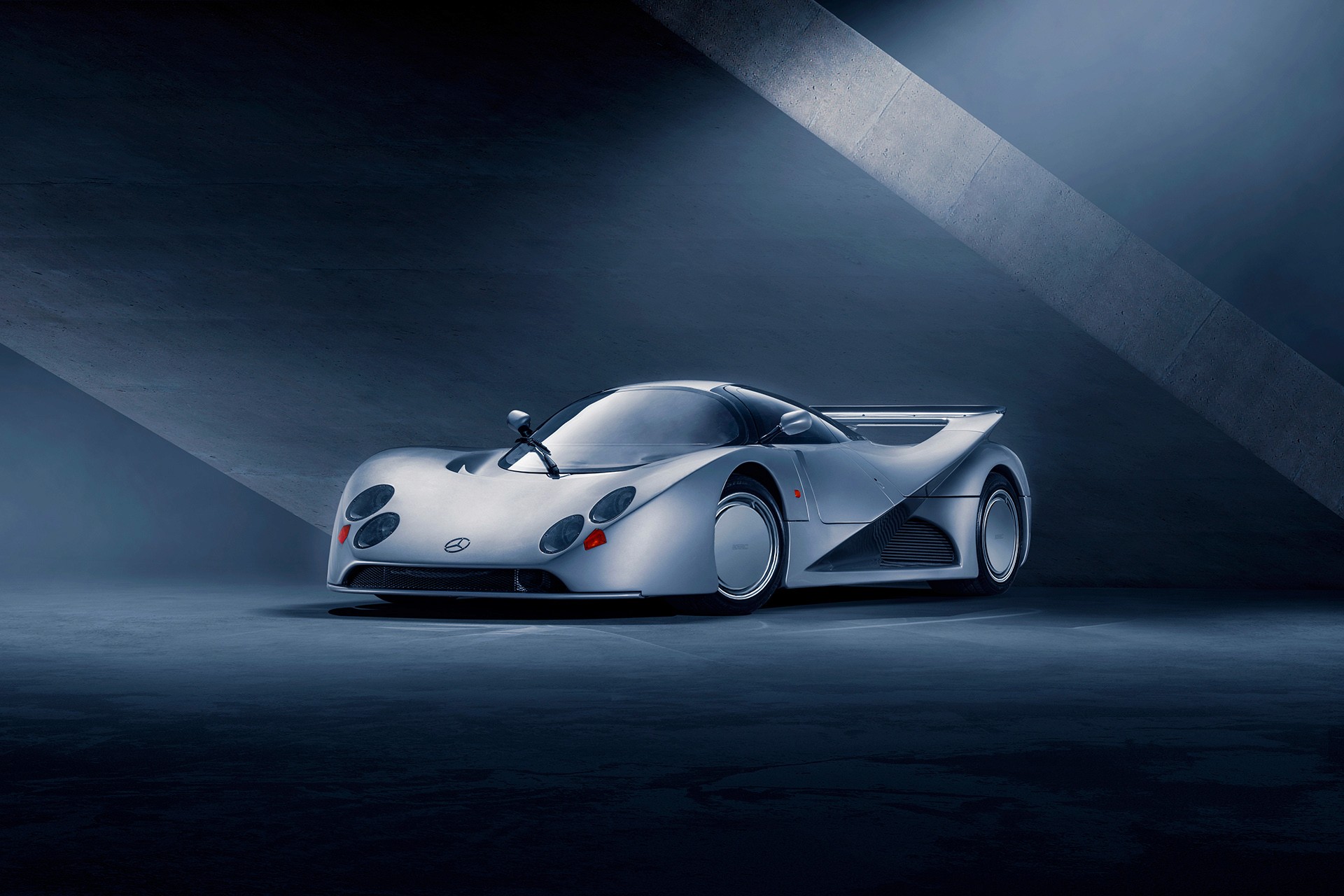
Even its lighting carried a trace of pragmatic improvisation. Rather than commission a bespoke headlamp housing, Lotec adapted units from an Alfa Romeo 164 and inverted them, allowing their narrow horizontal form to disappear into the C1000’s front fascia.
Built around the driver
The carbon-fibre bucket seats were moulded directly into the chassis, so they could not slide. Lotec’s answer was a racing-style adjustable pedal box: the clutch, brake and throttle assembly moved toward or away from the driver via a manual release. Beside the analogue 400 km/h speedometer, a custom digital display monitored boost pressure, oil temperature and fuel management — a remarkably advanced cockpit for 1995.
Speed came with compromises
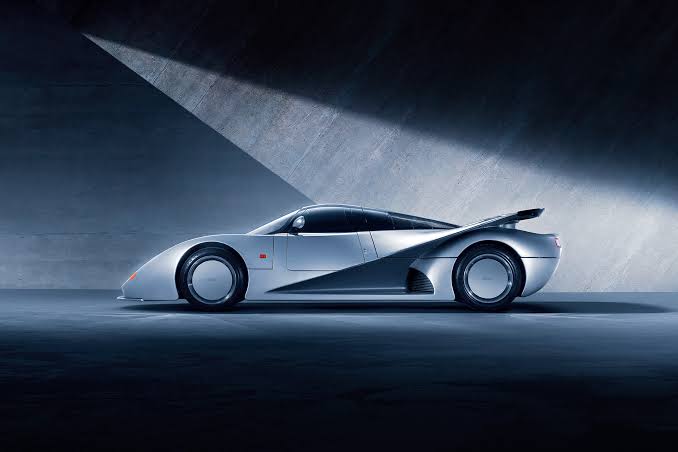
The centre-lock three-spoke wheels were custom-made by BBS, while specially reinforced Michelin racing slicks were hand-grooved to resemble road tyres. At the claimed 268 mph, normal road-legal rubber was not a risk Lotec was prepared to take. Packaging was equally uncompromising: the tight front arches barely left room for steering lock, turning low-speed manoeuvres into a multi-point exercise.
And because the twin-turbo Mercedes V8 sat immediately behind the cabin, the car carried an integrated fire-suppression system. A prominent red cockpit button could flood the engine bay with fire-retardant foam — another reminder that the C1000 was never intended to behave like an ordinary road car.
NEXT IN THE JOURNAL